
Safety
Eight years in the Permian. Zero recordable incidents.
Take the worst of the hazard out of the space and everything after it is easier to control. Every atmosphere is tested before anyone enters, and where H2S, LELs, or benzene are present, the exposures that act fastest in a vessel, we treat the space with 509 before work starts to break them down. Most jobs then run with nobody inside at all. Heat, footing, and restricted access are still there, and they get managed the way they should be. That is the principle the rest of our safety program is built around.
Our approach
We take the hazard out first, then manage what is left
Confined space work is the highest-consequence exposure in tank cleaning, and several things make it so: heat, footing, restricted access, and the atmosphere itself. The atmosphere is the one that can put somebody down before anyone gets to them, and H2S, LELs, and benzene are the worst of it. Where any of them are present, our 509 treatment breaks them down before the cleaning starts. Gentex is a 509 distributor: we apply it on our own jobs, on oilfield vessels and chemical plant vessels alike, and we sell it to customers who want it for theirs. Most programs manage that atmosphere with paperwork; we change the atmosphere. What it does not do is make a vessel safe on its own, which is why the rest of this program exists.
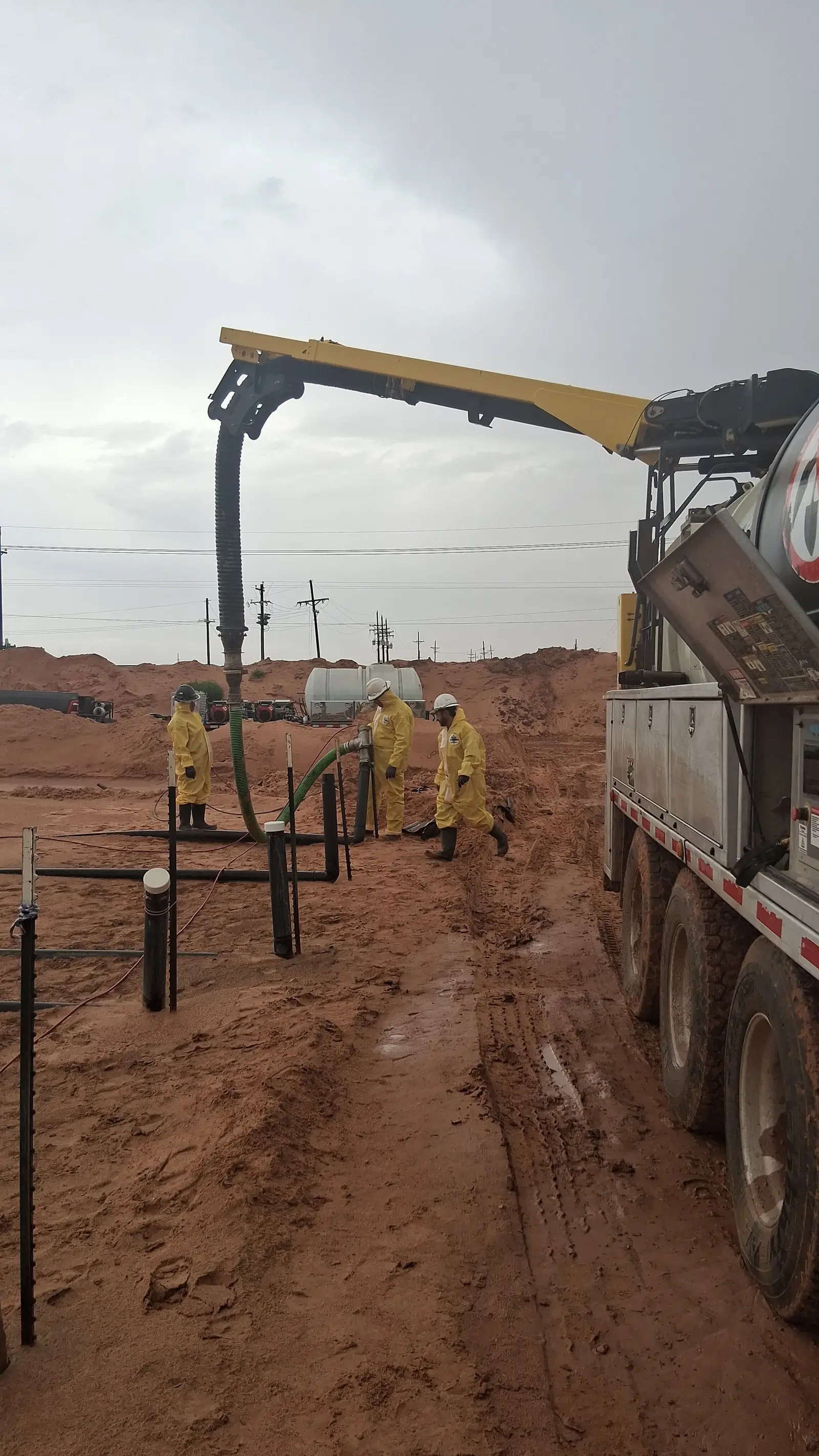
Our equipment reaches a tank end to end from the manway, so most jobs run with nobody inside at all. When a job does call for an entry, because the tank has to be closed out from within or has to come back cleaner than a wash alone will get it, our certified crews enter after any 509 treatment the atmosphere called for, after the bulk of the material is knocked down from the outside, and with the atmosphere monitored throughout. Your safety team has the final say on any entry and we work to their permit.
Staying out of the vessel is also the cheaper way, and not by accident: no permit clock, no attendant, no entry rotation. When an entry cannot be avoided, cutting the time inside is the whole job: less exposure and fewer billed hours at once.
Everything else is discipline: analysis before and during the job, meetings every month, PPE matched to the task, GPS on the equipment, and a supervisor standing on the location who is accountable for how it goes. None of it is what slows a job down. An unplanned stop is.
Eight years, zero recordables. We would rather show you the program than the number. Call us and we will walk your safety people and your cost people through the same process.
The program
What we do on every job
Monthly safety meetings
Every crew sits down every month. We review what happened on our own jobs, what changed in the field, and what we are going to do differently, with the people who actually do the work in the room. Most of what comes out of those meetings makes the next job quicker as well as safer.
Jobsite safety analysis, before and during
A JSA is completed before work starts and revisited during the job, and on a confined space it is written around the atmosphere we found and any 509 treatment already applied. Conditions on a location change through the day; the analysis changes with them instead of sitting in a truck as a signed form. Catching a change in the morning costs a conversation. Catching it late costs the rest of the day.
GPS monitoring
Our equipment is GPS monitored. We know where every unit is, how it is being operated, and when it arrived, for your reporting and for our own accountability. It is also how we keep a unit from sitting on your location billing hours it is not working.
Documented on our own software
We run our own field operations and dispatch software, so a job is logged as it happens rather than reconstructed from memory afterward: the JSA, the safety checks, the scope, and the condition the work was left in. If your auditor or your own safety group asks what happened on a location, the record exists and we can hand it over. It also means the next crew on a repeat job starts with what the last one learned.
Proper PPE for all jobs
PPE is matched to the task, not to the minimum. The right protection for the product, the pressure, and the environment on that specific job, inspected and replaced when it needs to be. Showing up with the right gear is also what keeps a crew working instead of standing down.
Certifications
Registered in ISNetworld® and Veriforce®
Gentex Services is registered in the contractor networks Permian operators require, and our records are kept current there.

Need our documentation, insurance certificates, or safety statistics for your vendor package? Ask and we will send them.
Need a crew on location?
Tell us the vessel or the facility, the site, and the timeline. We will tell you what the job actually takes, what we do to the space before anyone starts, and what it costs to get it done right the first time.